

# Electric vs Gas HVAC: Which System Wins for Corpus Christi Coastal Efficiency and Cost Savings in 2025?
Humidity. Salt. Sun. Living and working on the Texas coast means your HVAC system is up against some of the harshest conditions in the country. It's not just about staying cool—it's about fighting off corrosion, stretching every dollar on those summer energy bills, and picking a system that won’t let you down after every big storm. Homeowners face a tough choice: electric or gas HVAC? The answer isn’t one-size-fits-all—what works on the mainland can flop fast near Corpus Christi’s shore. This article breaks down everything you need for smarter savings, higher hvac efficiency, and the kind of year-round comfort that makes coastal life a breeze.
Forget the usual sales pitch. Here comes guidance built for the Gulf Coast—clear, step-by-step, loaded with what works (and what’ll cost you extra if you get it wrong). Whether you’re repairing, replacing, or installing new in 2025, Ramco Mechanical is about to put you in the driver’s seat. Ready for specific, expert-backed answers on electric vs gas HVAC for Corpus Christi? Let’s put the debate to rest with facts and pro strategies.
## What drives HVAC efficiency on the Texas coast — and does electric or gas actually make a difference?
What drives HVAC efficiency on the Texas coast—and does electric or gas actually make a difference? Yes, because Corpus Christi's costal climate shapes your system’s success. Salt air, high humidity, long seasons, and hurricane threat make nearly every mainland rule backwards here. For searchers wanting to know how to improve hvac efficiency, it’s not just about the label on your unit—it’s about matching the system to the climate and your home’s quirks.
Electric and gas HVAC systems don’t always play fair with salty, damp air. Electric models usually need less maintenance under coastal stress, but gas can come in cheaper at first glance—until corrosion cleanup starts racking up costs. Another secret: where and how big your home is affects performance (not just the “gas or electric” checkbox—think window count, room orientation, and whether salty breezes sneak through the insulation). For most, custom system design is the actual win. Explore Ramco’s [services](https://ramcomechanical.com/our-services) or get tactical with proper [duct cleaning](https://blog.ramcomechanical.com/post/what-does-regular-duct-cleaning-do-for-hvac-efficiency) to see the difference.
### Real talk — here’s what most people miss even after years of owning a house.
- Most folks forget: on the coast, monthly filter changes are the bare minimum for hvac efficiency—ignore salty buildup and you’ll be sweating through repairs fast. Pro tip: Set reminders to swap each filter every 30 days (don’t wait for it to look dirty—humidity means hidden build-up).
- Regular coil and duct cleaning stops coastal particles before they choke your system, so book professional deep cleans at least twice yearly—especially after heavy pollen or flood events. Even if you’re handy, expert-level cleaning finds mold and salt-packed areas that DIY jobs usually miss.
- Owners who monitor efficiency get ahead with thermal cameras to spot cold spots around windows and use weather stripping to keep moist air away from sensitive components. Small things like these can save piles of cash and years of extra use from your system.
Curious how electric systems do the heavy lifting with less grit and grime? Check out why their efficiency rises in sticky Gulf Coast climates.
## How do electric HVAC systems stack up for energy efficiency in humid coastal climates?
Electric HVAC systems stack up strong for energy efficient hvac in humid coastal climates—2025 efficiency upgrades now put electric heat pumps and mini-splits in the lead for Corpus Christi’s long, damp cooling seasons. These units not only offer superior dehumidification but also provide variable-speed runs that battle the sticky air, lowering overall energy consumption compared to traditional gas systems. Season after season, electric systems flex to the outdoor changes better, giving homeowners steady comfort.
Systems with high SEER2 and HSPF2 ratings are more important on the Texas coast than almost anywhere else in the state; longer run times mean little flaws grow into big cost sinks. Factor in summer’s peak energy rates and federal rebates driven by new CEE rules starting January 2025\*, high-performing electric systems can land you tax credits and substantial savings. Compare rates or learn more about optimizing with [thermostats](https://blog.ramcomechanical.com/post/programmable-vs-smart-thermostats-which-best-for-home) and [humidity control](https://blog.ramcomechanical.com/post/how-hvac-humidity-control-make-home-more-comfortable).
### Here’s one electric trick that’ll drop those sticky summer bills right away.
- Smart settings are your silent sidekick: A programmable thermostat, set for temperature “setbacks” when you’re sleeping or out, can cut mini-split or heat pump runtime by up to 20 percent. That means lower bills and less wear-and-tear—money in your pocket all season.
- Upgrading to new inverter-based heat pumps isn’t just greener; these units ramp up or down as needed, killing that noisy on/off cycling. They keep comfort steady, filter mold-prone air better, and make those marathon humidity stretches less of a fight.
- Don’t ignore rebates: New 2025 CEE standards\* make high-efficient, grid-responsive electric units eligible for significant tax credits—ask your installer for paperwork before you commit. Bottom line: act now and bank the savings well before the next costly summer spike.
But does this mean gas systems are yesterday’s news? Not quite—here’s where they still make waves (and where they can sink your budget).
## What about gas HVAC — is it still a smart call for Corpus Christi homes in 2025?
Gas HVAC remains a smart call for Corpus Christi homes in 2025—if your priorities focus on fast, robust winter heat and you’re prepared for coastal corrosion challenges. Gas furnaces still win on rapid heating response and may shine on operating costs when natural gas rates are low\*, but their upfront price is steeper, and maintenance demands climb fast in salty, stormy air.
The best high efficiency gas models do match heat output to real demand—saving fuel and dodging waste—but require specific salt-guard service packages (not just a basic tune-up). Holiday cold snaps rarely dip below freezing here, so much of that gas system power sits unused. For homes closer to the shore, electric systems often outlast gas by several years, outpacing them in lifespan and cost when you account for routine [maintenance](https://blog.ramcomechanical.com/post/what-are-vital-seasonal-hvac-maintenance-tasks-autumn) tasks and salt-proofing. Extend your existing system’s life with practical [corrosion protection](https://blog.ramcomechanical.com/post/how-to-extend-hvac-lifespan-in-corpus-christis-salt-air).
### If you’re going gas — these are the routines that’ll save you from a dead unit.
- Schedule full professional cleaning and inspection twice a year—spring and fall are your lifelines. These checks spot burner rust, heat exchanger cracks, and salt build-up before they break your heat mid-winter.
- Insulate and wrap every outdoor gas line with anti-corrosive material. Most Corpus Christi homeowners forget this step, leading to leaks and gas pressure drops each rainy season.
- Ask for a salt-guard maintenance package (some are available only in coastal markets)—insist your provider tests ignition speed, venting paths, and protects exposed metals with a clear, industry-grade barrier.
So, if electric and gas each fit different needs, which one offers the best savings over ten years?
## So which system really saves you the most money in Corpus Christi’s humid climate?
Upfront costs and long-term savings tell very different stories—calculating true HVAC savings in Corpus Christi’s humid climate means looking at the 10-year total for equipment, operating costs, and expected lifespan. Electric heat pumps, once seen as a luxury, are often priced higher to install but pull ahead with utility rebates, lower summer bills, and better resilience versus corrosion\*.
Gas systems can look cheaper at first, but factor in salt-proofing, extra maintenance, and an average replacement every decade near the coast—electric models, especially those with variable speed tech and modern controls, can last three to five years longer, lowering total ownership costs. The home’s unique layout—think insulation strength and window quality—also changes the equation, since “the most efficient hvac system” for one house can underperform in another. Combine system choices with [zoned upgrades](https://blog.ramcomechanical.com/post/how-does-zoned-hvac-improve-home-comfort-efficiency) or see years-long energy improvements from [insulation and sealing upgrades](https://blog.ramcomechanical.com/post/how-can-hvac-upgrades-improve-energy-efficiency-over-time).
### People always forget this cost-buster: zoned cooling and sealing out the salty air.
- Zoned temperature control can transform your comfort and cut bills by directing heating/cooling power only where it’s needed (cool the kitchen during lunch, seal off guest rooms until company arrives, and so on).
- Invest in sea-salt gaskets and high-build caulking at duct joints and wall penetrations—these small steps can triple the lifespan of your system, reducing leakage and fighting hidden utility loss.
- Insist on a full coastal assessment before buying—pros who’ve worked Corpus Christi homes know to flag hidden draft areas, select salt-resistant parts, and recommend unique home-by-home strategies for maximizing hvac efficiency.
After locking in the right system for your budget and space, keeping it running at peak performance means following the pros’ playbook—here’s what they really do.
## What are the sharpest hvac efficiency tips the pros swear by in 2025?
The sharpest hvac efficiency tips pros swear by in 2025 zero in on more than just swapping your filter—they target hidden areas where salt, mold, and dust silently drain your system’s power. Industry experts know the drill: it’s all about cleaning the insides (coils, fan blades, drain traps) and running system checks right after storms or season changes. These steps are simple, but they deliver serious long-term value—lower bills, better comfort, fewer breakdowns.
DIY checklists have their place, but nothing beats a professional biannual service for warranty protection and real savings (many manufacturers deny claims without documented twice-a-year maintenance). Upgrades to smart controls, ultra-efficient motors, and refrigerants like R-32 or R-454B can shave 15–20% off power use each season\*. See behind the scenes with [company info](https://ramcomechanical.com/about-us) or build better habits with a custom DIY [maintenance guide](https://blog.ramcomechanical.com/post/how-create-diy-hvac-maintenance-checklist-yourself).
### Here’s that “wish I’d known” list that homeowners text each other after upgrading.
- Change filters every month without fail using a reminder app like Todoist or Google Keep—filters that look just “dusty” on the Gulf can already be clogged with salt and pollen.
- After any coastal storm, grab a flashlight and check for water leaks or duct tears in attic or crawl spaces—small repairs done early prevent $1,000+ air loss over a few years.
- Ask for high-MERV filters at install for extra mold, dust, and sea salt removal. Corpus pros often upgrade these on every call, quietly doubling air quality and system lifespan above the minimums most contractors offer.
When it’s time for your next upgrade, how do you actually pick a system and vet your installer like a pro?
## How do you actually pick the right HVAC system for your Corpus Christi home — and what should you ask a pro before you buy?
To pick the right HVAC system for your Corpus Christi home, go beyond the brochure. Start with a Manual J heat/cool load calculation—demand this from every contractor (real pros never guess here, because every window, wall, and room orientation tells a different story). Ask which models see the fewest rust and corrosion calls in local service records—this is your shortcut to fewer headaches and better long-term hvac efficiency.
Every good installer will list the expected humidity risk, filter timeline, and salt-guard options inside the project quote. Get the full picture with peer reviews from local homeowners, or message Ramco’s [team](https://ramcomechanical.com/contact-us) about specs, warranty, or unique salt-air upgrades before you sign. Track down [real reviews](https://ramcomechanical.com/reviews) from folks on your block for honest insights.
### The three questions that separate so-so installs from lifetime systems.
- Do you provide coastal-grade protection—extra wraps, coatings, and parts built for salt air—and is there a long-term parts warranty for corrosion?
- Can you show references from customers with similar coastal homes? Seeing proven system lifespans and efficiency under local conditions tells you way more than national warranties.
- What’s the real story on seasonal filter swaps and deep cleans? Will they alert me (text, call, or email) when it’s time, and can I get a preventive maintenance agreement in writing?
After getting the right answers and a legit local install, who really puts these promises into action year after year for the Corpus area?
## Where can you turn for trustworthy HVAC help in Corpus Christi — and what makes Ramco Mechanical’s approach different?
Turn to Ramco Mechanical for trustworthy HVAC help in Corpus Christi—where old-school honesty and sharper high-tech workflow set the standard. Unlike “truck-and-go” installers, Ramco Mechanical treats the coast as its specialty zone: systems, schedules, and materials are customized to stand up to south Texas humidity, surprise storms, and extreme salt wear.
Choose from full-service care: Book [online](https://ramcomechanical.com/) for hassle-free appointments, take advantage of digital reminders, or use live tech chat for urgent advice. Ramco’s team is entirely local—from emergency help to detailed seasonal [customer support](https://www.facebook.com/ramcomechanical), each tip and solution is built for the coast, drawing on hundreds of successful Corpus installs and service records. “Quality is never an accident. It is always the result of intelligent effort.” — John Ruskin
### Old-school honesty meets high-tech HVAC — that’s how we do it in 2025.
- Simple booking and real-time chat connect you to experts who know every Corpus neighborhood—no automated hoops or national call centers, just local know-how.
- Pick a maintenance plan that sends reminders for filter swaps, tune-ups, and post-storm checkups—never miss a maintenance window again.
- Whether you’re fixing, installing, or optimizing, Ramco Mechanical uses proven, high-efficiency systems and custom-protects them for the coastal environment, keeping you comfortable and saving money, rain or shine.
Ready to upgrade your comfort, cut those bills, and get ahead of salt-air stress for good? Book your service, call (361) 356-6002, or open live chat to get expert help today. Your coastal home deserves smarter, tougher HVAC—Ramco Mechanical delivers.
[\*SOURCES: [cee1.org](https://cee1.org/index.php/news/details/2025-cee-performance-requirements-for-hvac-and-water-heaters-integrate-federal-and-utility-incentives-to-increase-adoption-of-high-performing-heat-pumps), [cooledbyjohnstone.com](https://www.cooledbyjohnstone.com/2025/06/staying-ahead-in-south-texas-hvac.html), [airco.com](https://www.airco.com/blog/gas-vs-electric-furnaces-in-texas)]
ramco mechanical - Corpus Christi, Texas.
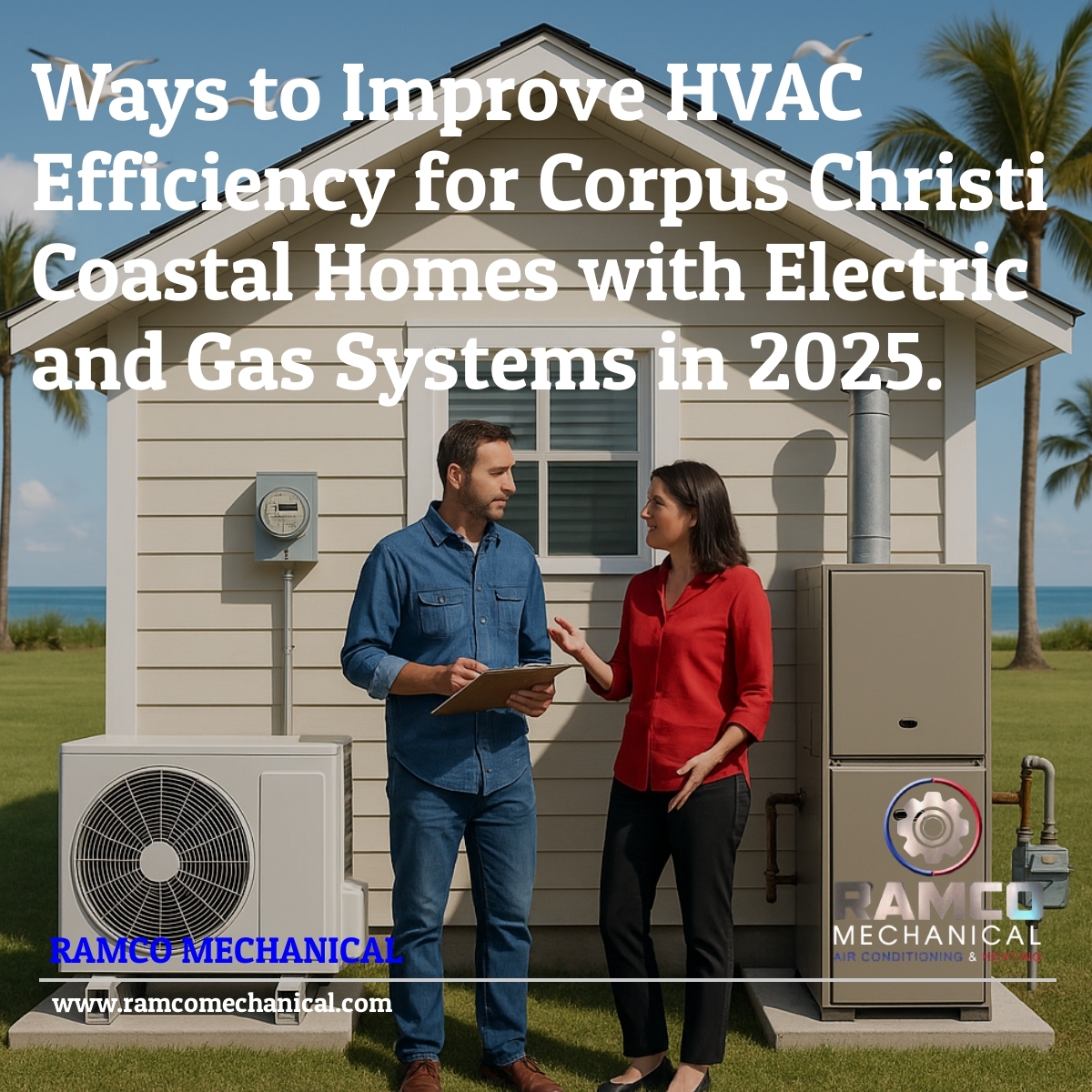
Ways to Improve HVAC Efficiency for Corpus Christi Coastal Homes with Electric and Gas Systems in 2025.
24/7 hvac help available


.svg)
.svg)
.svg)
.svg)
.svg)