

# How do electrical storms in Texas really impact your HVAC—and what can you do to protect it?
Texas storms like to show off—crackling thunder, sheets of lightning, sudden downpours… The real trouble comes afterwards, when you realize your HVAC system’s taken a hit. Suddenly, hot air is all you get, or maybe nothing works at all. Every power flicker and zap puts your investment at risk, leaving you sweating the next electric bill or repair quote.
Everyone knows replacing compressors or fried control boards isn’t pocket change. Most people don’t even realize how often those expensive parts suffer quietly until, one steamy afternoon, the cool air vanishes. Let’s walk through what’s really going wrong inside your HVAC when the Texas sky lights up—and, more importantly, how to protect my hvac system from power surges in a way that actually works for the long haul.
Ready to outsmart Texas storms and keep your family (and wallet) comfortable every season? Here’s exactly what separates cracked coils and corroded wiring from HVAC systems that last for years—all spelled out in everyday language. What’s the right defense, what’s just hype, and what’s the step-by-step upgrade that pays you back in peace of mind?
## What does HVAC protection actually mean for your system during Texas storms?
HVAC protection means using proactive strategies and specialized hardware to keep your air conditioning and heating safe during unpredictable Texas storms. “How to protect my HVAC system from power surges” is about more than generic surge devices—it’s a precise approach that includes spot surge protection, smart maintenance, and must-have documentation for informed homeowners.
Installing a dedicated surge protector shields your HVAC circuit board and compressor from voltage spikes caused by lightning or grid disturbances. Without it, even a single surge event can destroy the system’s brain in half a second—a problem far costlier than buying dedicated protection. Think of it like insuring all the sensitive parts you count on daily. Surge events don’t just outright destroy components; smaller, repeat surges quietly shorten the life of capacitors and compressors, stacking up hidden repair costs over time\*.
Many believe a whole-home surge unit is enough—but your HVAC needs spot protection right at the equipment for true defense. Here’s what catches even seasoned pros off-guard: most insurers won’t help with storm damage claims if you can’t document having surge protection installed. This is one area where a $100 part can save you from thousands in denied claims.
When you’re planning your next maintenance or installation, consider working with a [specialist](https://ramcomechanical.com/) who can recommend a surge protection system tailored for your setup, and read how [preventative maintenance](https://blog.ramcomechanical.com/post/how-does-preventative-maintenance-impact-energy-bills-hvAC) directly impacts your energy bill, too. Knowing which protection works for your exact hardware can be the difference between a seamless summer or an emergency repair rush. What about the hidden risks people miss right after a storm?
### Here’s what Texans miss when a storm rolls through—why surge protection is make-or-break.
It’s easy to assume your HVAC is safe if it’s “off”—but the control boards inside often stay energized and ready to activate. Surges from a lightning strike miles away can travel through underground or overhead lines, damaging sensitive boards and relays. The worst part? Many surge events are so brief you won’t notice anything is wrong until the system slowly fails—sometimes days or weeks later.
By the time symptoms appear, the fix is rarely simple. Quiet, unnoticed electrical events can silently wear out HVAC components, making [overcurrent protection](https://ramcomechanical.com/about-us) absolutely critical for keeping equipment running. Reviewing a few [seasonal maintenance](https://blog.ramcomechanical.com/post/what-are-vital-seasonal-hvac-maintenance-tasks-autumn) tasks can uncover hidden weak points before the next stormy weekend hits. What’s the next step to get the best protection for your HVAC investment?
## How can you protect your HVAC from electrical storms (and do surge protectors really work)?
Protecting your HVAC from electrical storms requires action beyond plugging in a strip. Install a professionally-rated surge protector tuned for your compressor and air handler’s load. This means reviewing your equipment specs and picking hardware with the right size and clamping voltage. Surge protectors aren’t all created equal—select one with a spike trigger below 900V. Cheaper alternatives let in more voltage than you want to risk.
Grounding should be checked by a licensed technician—loose or failing grounds pull surges to your system, making it a magnet for electrical chaos. Humidity and coastal salt in Texas also play a role; ask your pro about weather-sealed models that stand up to the harshest conditions. According to recent storm data, experts strongly advise investing in surge protection for HVAC specifically, not just hoping your whole-home unit does it all\*.
Your best results come from partnering on a [service](https://ramcomechanical.com/our-services) package that includes surge evaluation (ask to see real product specifications and test reports). Curious about what your system needs for 2025? There’s a full guide on [HVAC maintenance frequencies](https://blog.ramcomechanical.com/post/how-often-should-you-maintain-HVAC-2025) worth checking out before the next storm season rolls in.
### Most surge protectors miss this—don’t skip a pro installation.
• Power strips indoors don’t shield your outdoor condenser; those units require specialized protection mounted at the disconnect—without this, a storm takes them out in one pulse.
• Only purpose-built, hardwired surge protectors intercept damaging voltage where it enters your HVAC—leaving wall strips and home units alone is a pro’s move for true compressor protection.
• Having your gear installed by a licensed technician unlocks access to real warranties and assures [error-free installs](https://blog.ramcomechanical.com/post/why-choose-professional-hvac-over-diy-repair-mistakes)—plus easy [contact](https://ramcomechanical.com/contact-us) if an indicator light ever changes color. Ready to dig into which storm threats are most dangerous to modern HVAC systems?
## What are the biggest threats to HVAC lifespan in a Texas electrical storm?
The biggest threats to HVAC lifespan during Texas electrical storms are surge-sensitive parts, especially compressors, circuit boards, and electronic relays. A quick zap—sometimes from a distant strike—can arc across semiconductors, killing the board instantly or causing weird issues days later. Lightning, even if it hits a neighbor’s tree, may send current through buried lines.
Every “brownout,” momentary power drop, or grid surge risks locking out your compressor—a condition that looks like a minor issue, but can mean deep internal damage. Even small, repeated surges degrade parts little by little, silently staging costly failures. This effect is amplified when systems are left uninspected year over year\*.
If your HVAC lives near the coast or in an area hit by salt air, you’ve got extra risk—moisture sneaks into connection points, making electrical faults steeper and faster. Still doubting the value of scheduled maintenance? [Regular system checks](https://blog.ramcomechanical.com/post/how-regular-hvac-maintenance-cuts-energy-bills-2025) and [targeted upgrades](https://blog.ramcomechanical.com/post/how-to-extend-hvac-lifespan-in-corpus-christis-salt-air) can double the lifespan of exposed units. But what does this mean for your warranty, and what’s the real risk of being denied coverage?
### Why HVAC warranties can be denied after surge damage (and what you can do about it).
Many HVAC warranties include fine print: if surge protection wasn’t installed and documented, claims on fried compressors or control boards can be denied outright. The pros install a $100 surge device up front to avoid the “big no” from a manufacturer when major parts fail. When a storm hits, being able to show documentation is a game-changer for coverage.
Smart homeowners read up on [warranty terms](https://blog.ramcomechanical.com/post/understanding-your-hvac-warranty-to-maximize-coverage) and commit to [seasonal maintenance](https://blog.ramcomechanical.com/post/hvac-maintenance-tips-save-money-corpus-christi-2025) to keep policy intact. Before you sign, ask your contractor for proof that surge protection was installed—don’t wait for a storm to test where you stand. Wondering which surge device will actually cover all the bases?
## Which type of HVAC surge protection device works best—and what should you ask before buying?
The best HVAC surge protection devices are UL-listed (UL 1449 rating required) for HVAC use—not generic units from the discount aisle. Layer general overcurrent protection and a dedicated compressor surge protector for real defense. Ask for clamping voltage specs and maximum amp handling—these numbers define how quickly and well the device will “absorb” a hit.
Don’t get fooled by basic whole-home units that stop slow surges but miss microsecond pulses. Smart buyers demand dual-stage filtering so their system is protected regardless of the surge’s nature. Read through recent [HVAC upgrade insights](https://blog.ramcomechanical.com/post/what-hvac-upgrades-improve-energy-efficiency-over-time) and check [customer reviews](https://ramcomechanical.com/reviews) for experiences with actual surge protector performance.
### You’d be surprised—here’s why budget surge protectors just don’t cut it.
• Cheap surge panels often die after a single, big Texas storm, leaving the system unprotected—while the owner has no clue.
• Pro-grade units come with replacement guarantees, diagnostic lights, and real support—they’re monitored, not just “set and forget.”
• When you care about [air quality](https://blog.ramcomechanical.com/post/how-do-uv-lights-improve-hvac-air-quality-efficiency) and system uptime, see what [experts](https://www.facebook.com/ramcomechanical) are saying and trust models the pros install, not just the lowest price on the shelf. Now, is there a way to build an HVAC protection plan that delivers year after year?
## How can you build an HVAC protection plan that saves you money and stress year after year?
Building an HVAC protection plan that lasts means pairing surge protectors with regular maintenance—think of it as your “insurance and inspection” combo. Every storm season, technicians spot hidden electrical issues or connections just waiting to fail. After big storms, check surge protectors for tripped indicators or accident alerts; replace or reset as needed. Surge monitoring is an annual must.
Pro tip: bundle surge checks into your annual HVAC service agreement. Combine this with humidity and air quality improvements for peak performance. The upshot? Longer system life, faster cooling, and far fewer outages. For hands-on options, create a [DIY maintenance checklist](https://blog.ramcomechanical.com/post/how-create-diy-hvac-maintenance-checklist-yourself) or learn about [emergency response](https://blog.ramcomechanical.com/post/why-is-emergency-hvac-service-important-and-when-to-call) with professionals on-call when the system’s acting up.
### Don’t wait until your next service call—add surge checks to your maintenance habit now.
• Surge devices often look fine until the next inspection—get in the habit of testing monthly. If you see a red light or tripped indicator, call for service before you run your system again.
• Adding surge checks to your own [DIY list](https://blog.ramcomechanical.com/post/how-can-you-do-simple-diy-hvac-maintenance-to-save-money-and-keep-it-smooth) or during a [pro tune-up](https://ramcomechanical.com/) is the trick to catching tiny issues before they snowball into massive headaches.
• “An ounce of prevention is worth a pound of cure,” said Desiderius Erasmus—a reminder as true for HVAC surge protection as it is for anything else. Testing your gear isn’t just good science—it’s cheap insurance.
If your goal is HVAC protection that lasts, choose devices built for the Texas grid, maintain them with intention, and call [Ramco Mechanical](https://ramcomechanical.com/) for help. Prefer to book online? Go straight to the [website](https://ramcomechanical.com/), dial (361) 356-6002, or start a chat with an HVAC expert whenever you need support. One last tip: never miss a surge check after the next thunderstorm, and your cooled air (and wallet) will thank you year round. 🌩️🛠️❄️
[\*SOURCES: [ellisac.com](https://www.ellisac.com/summer-storms/), [astardfw.com](https://astardfw.com/2024/12/extreme-winter-could-challenge-power-grid-in-early-2025-in-texas/), [tdworld.com](https://www.tdworld.com/electric-utility-operations/news/55294729/entergy-texas-conducts-emergency-storm-drill-ahead-of-2025-hurricane-season)]
ramco mechanical - Corpus Christi, Texas.
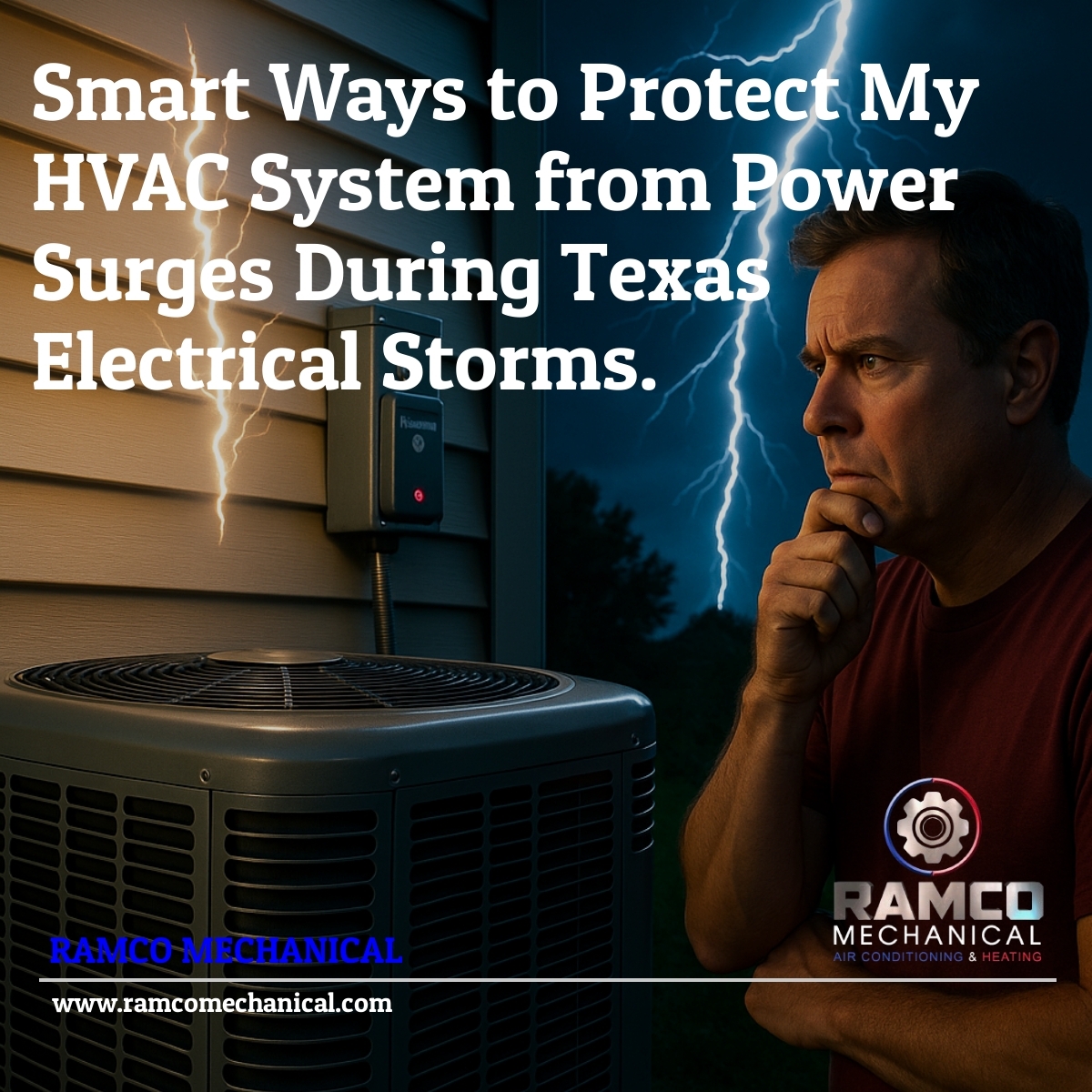
Smart Ways to Protect My HVAC System from Power Surges During Texas Electrical Storms.
24/7 hvac help available


.svg)
.svg)
.svg)
.svg)
.svg)